
Directional acoustics
A microphone array configured to evaluate selected airborne sound signatures and direction.
Robotic gas-leak inspection
Configure HYVIS robotic routes with directional acoustic capture and site-selected gas sensors to collect evidence around pipelines, valves and restricted process areas.
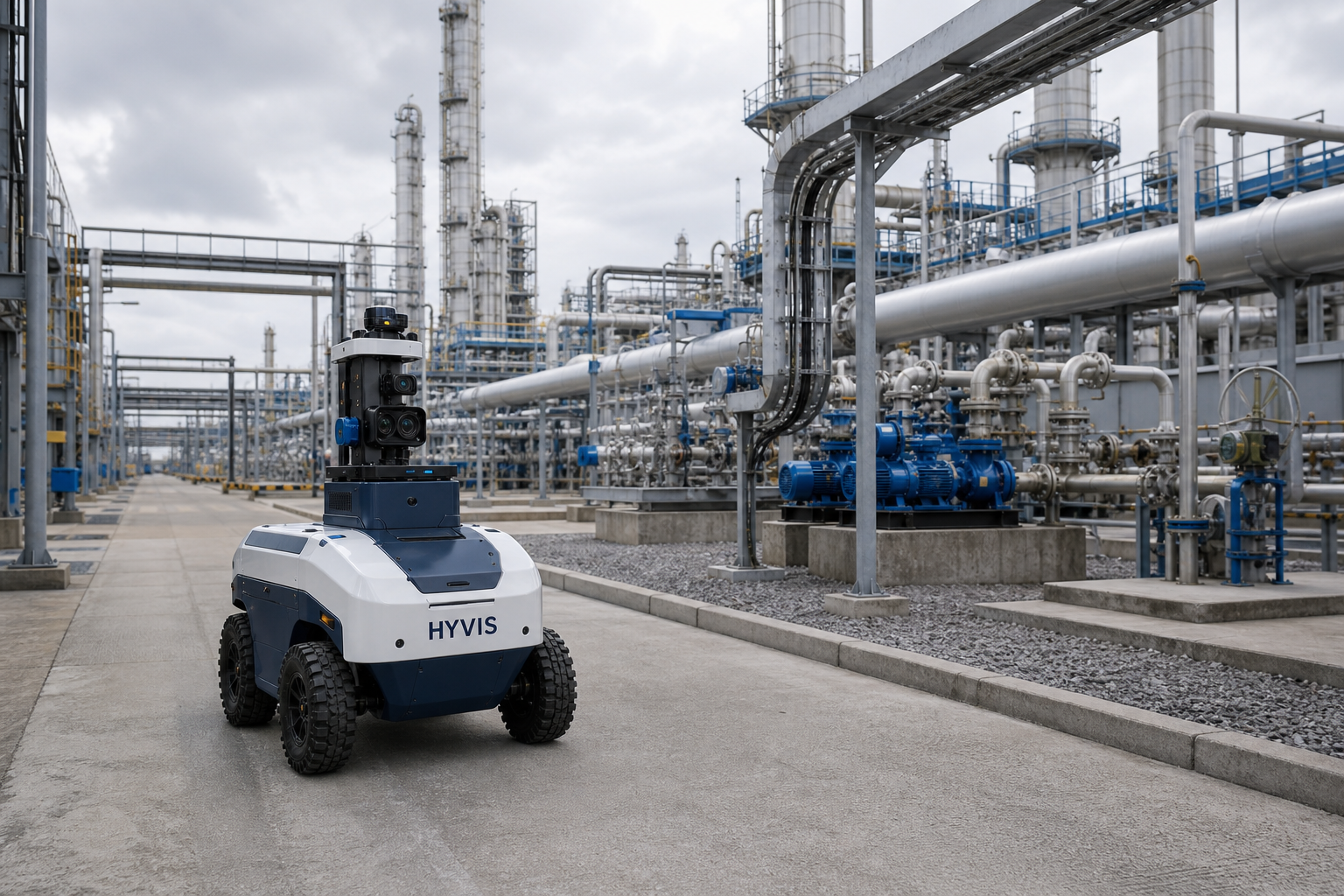
Representative application environment
Final platform, route and sensing configuration are site validated.
The inspection challenge
Acoustic signatures and gas readings can vary with wind, background equipment, sensor placement and the selected substance. A useful workflow connects the signal, direction, route position and visible asset for trained review.
A microphone array configured to evaluate selected airborne sound signatures and direction.
Sensor modules chosen for the target gas, expected range and environmental conditions.
A route platform selected around terrain, clearances and site restrictions.
Application workflow
The technology is selected after the inspection target and operating process are understood. Each stage creates an input for the next decision.
Identify the gas, asset class, route, background conditions and response procedure.
Record representative acoustic and environmental conditions before configuring alerts.
Collect acoustic, selected gas and visible evidence at registered locations.
Present the source evidence and route context to the team responsible for confirmation.
Validation note
No sensor detects every leak under every condition. The selected gas, airflow, background noise, sensor position and response thresholds must be assessed and validated at the site.
Application questions
It can provide directional evidence for selected sound signatures when the source has an airborne acoustic path and the background environment supports detection.
Gas modules are selected for the specific substance, expected concentration range, environment and project requirements.
An alert is evidence for the site's authorised confirmation and response procedure; it is not a universal declaration of root cause.
Site-specific assessment