Integrated technology architecture

From movement to perception, and from perception to action.

HYVIS integrates robotic mobility, sensing, AI analysis and operational workflow into one industrial inspection architecture.

Four coordinated layers Workflow connected Pilot validated
HYVIS autonomous inspection robot in a detailed electrical equipment environment

Architecture logic

Access · Sense · Interpret · Operate

System view

One inspection workflow. Four coordinated layers.

Machine perception

Robots extend human senses into industrial environments.

The analogy is useful, but each machine sense is task-specific. HYVIS selects sensors around the asset, route, operating conditions and evidence the customer needs to review.

Human analogue, machine evidence. Select a sense to compare the human role with its industrial sensing counterpart.
Swipe the sense card01 / 05
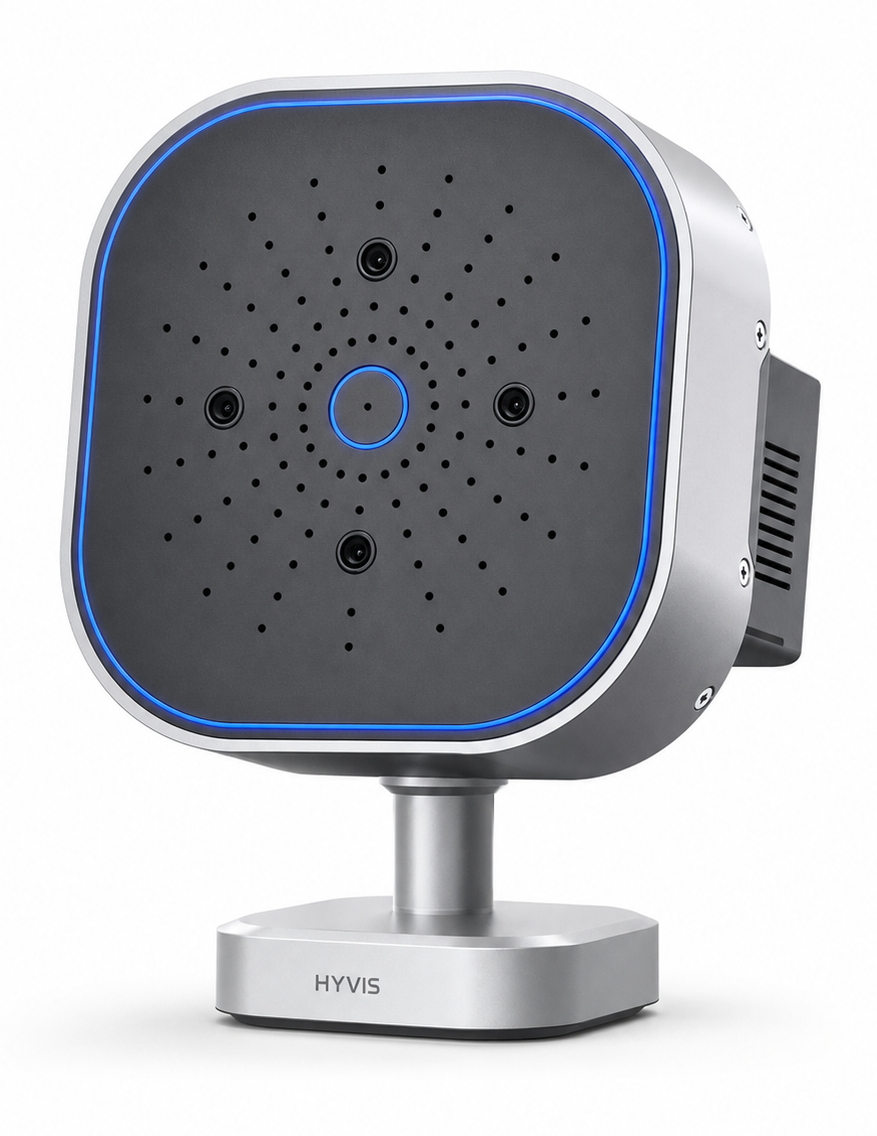
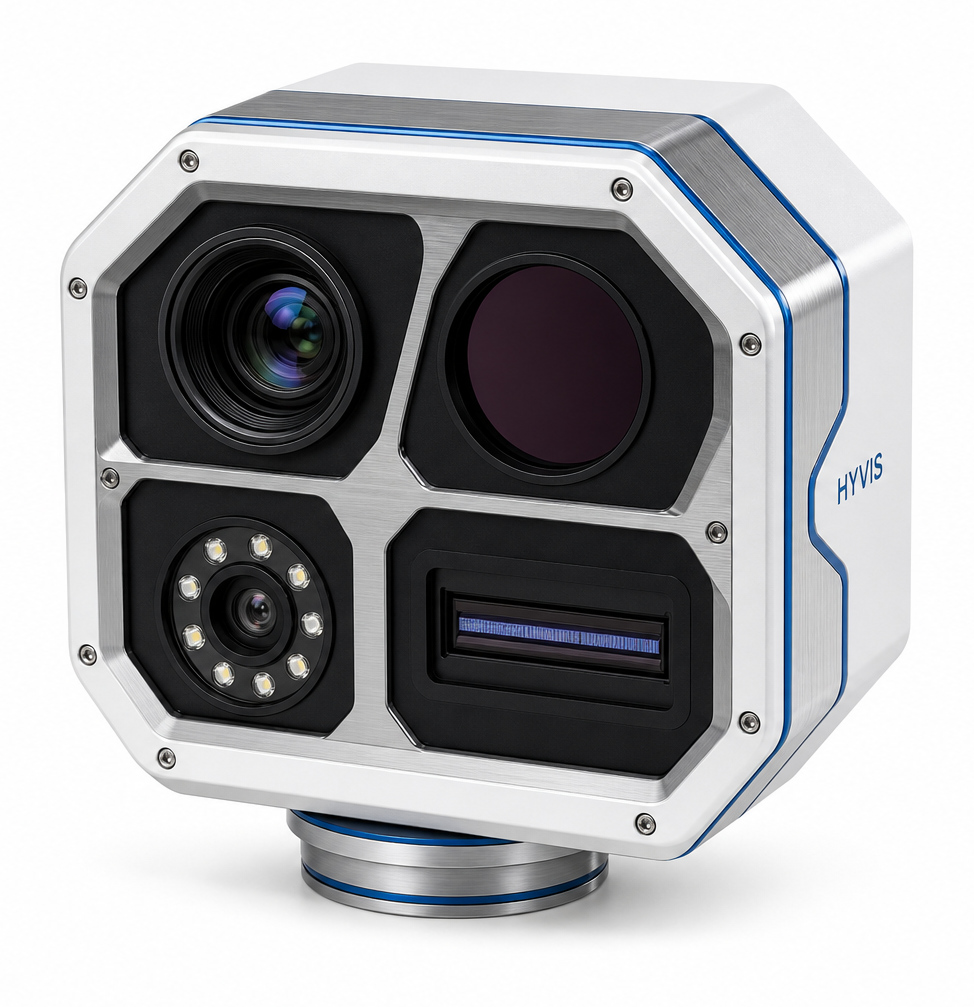
HYVIS multi-camera sensing head with RGB, thermal, infrared and hyperspectral modules
Machine sight · Site-selected optical modalities

Human Sight

Machine Visual evidence

See beyond the visible image.

A configured optical head can combine conventional colour imagery with thermal, infrared and spectral views. The right mix depends on the target, distance, lighting and evidence the inspection team needs.

RGB cameraThermal cameraInfrared cameraHyperspectral imaging

What it captures

Visible condition, heat patterns, low-light detail and selected spectral differences.

Operational use

Connect each recognition result or anomaly to the source image that produced it.
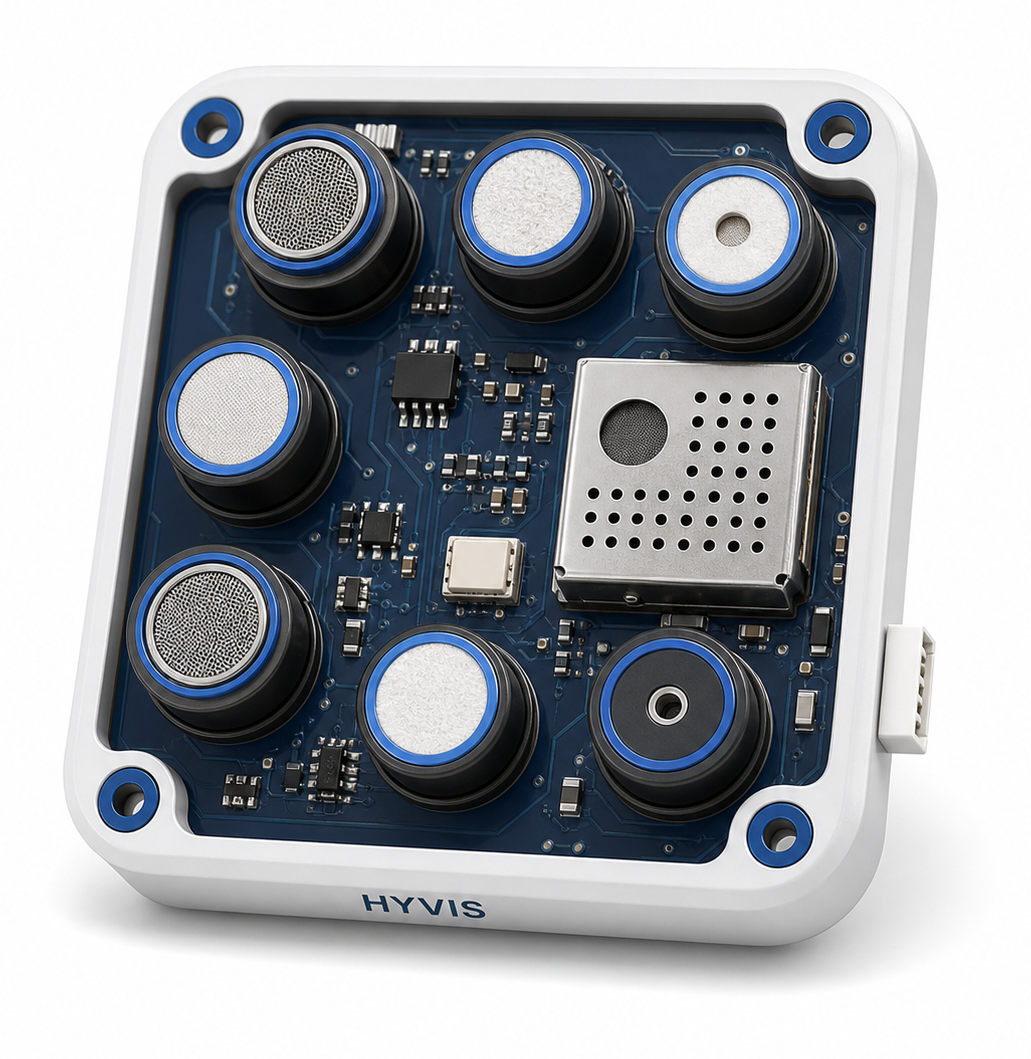
HYVIS environmental and gas sensing module with multiple sensor canisters
Machine smell · Configurable environmental sensing

Human Smell

Machine Atmospheric sensing

Sample what the air is carrying.

Environmental and gas sensors act as a machine analogue for smell by sampling selected atmospheric conditions. Gas channels and sampling strategy are chosen around the site hazard review—not treated as one universal sensor bundle.

Selected gas channelsParticulate sensingTemperatureHumidity

What it captures

Time-stamped atmospheric readings at a known route position and inspection point.

Operational use

Support threshold review, trend comparison and escalation when site-defined limits are crossed.

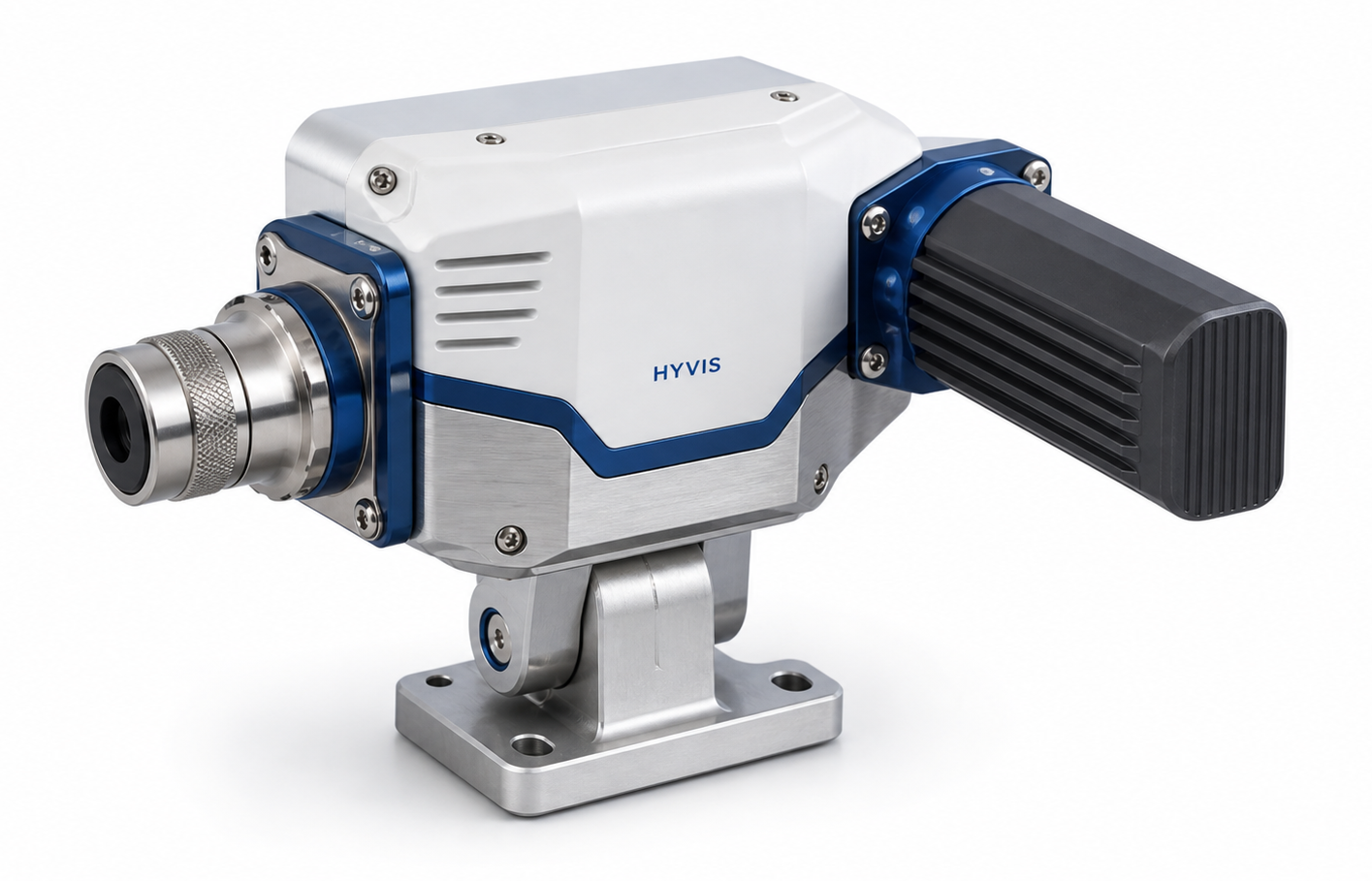
HYVIS 360-degree directional acoustic microphone array
Machine hearing · Directional acoustic evidence

Human Hearing

Machine Directional acoustics

Listen across a full field of sound.

A multi-microphone array can collect sound from every direction and estimate where a sound source originates. In the right conditions, that directional evidence can help investigate abnormal machinery noise, air or gas leakage and emergency events.

360° microphone arrayDirection estimationAcoustic imagingEvent recording

What it captures

Sound level, frequency content, estimated direction and a synchronized mission record.

Operational use

Guide an operator toward the likely source while preserving the acoustic evidence for review.

HYVIS combined ultrasonic and UHF non-contact inspection sensor
Machine touch · Non-contact proximity and field sensing

Human Touch

Machine Proximity & fields

Sense interaction without physical contact.

Ultrasonic and UHF methods are useful analogues for touch because they respond to distance, reflected energy or electromagnetic activity near equipment. They do not literally touch the asset, and their suitability depends on access, shielding and background conditions.

Ultrasonic sensingUHF field sensingProximity checksPartial-discharge screening

What it captures

Reflected acoustic energy, nearby field activity and the sensor position at capture time.

Operational use

Add non-contact evidence around assets where visual inspection alone may not explain the condition.

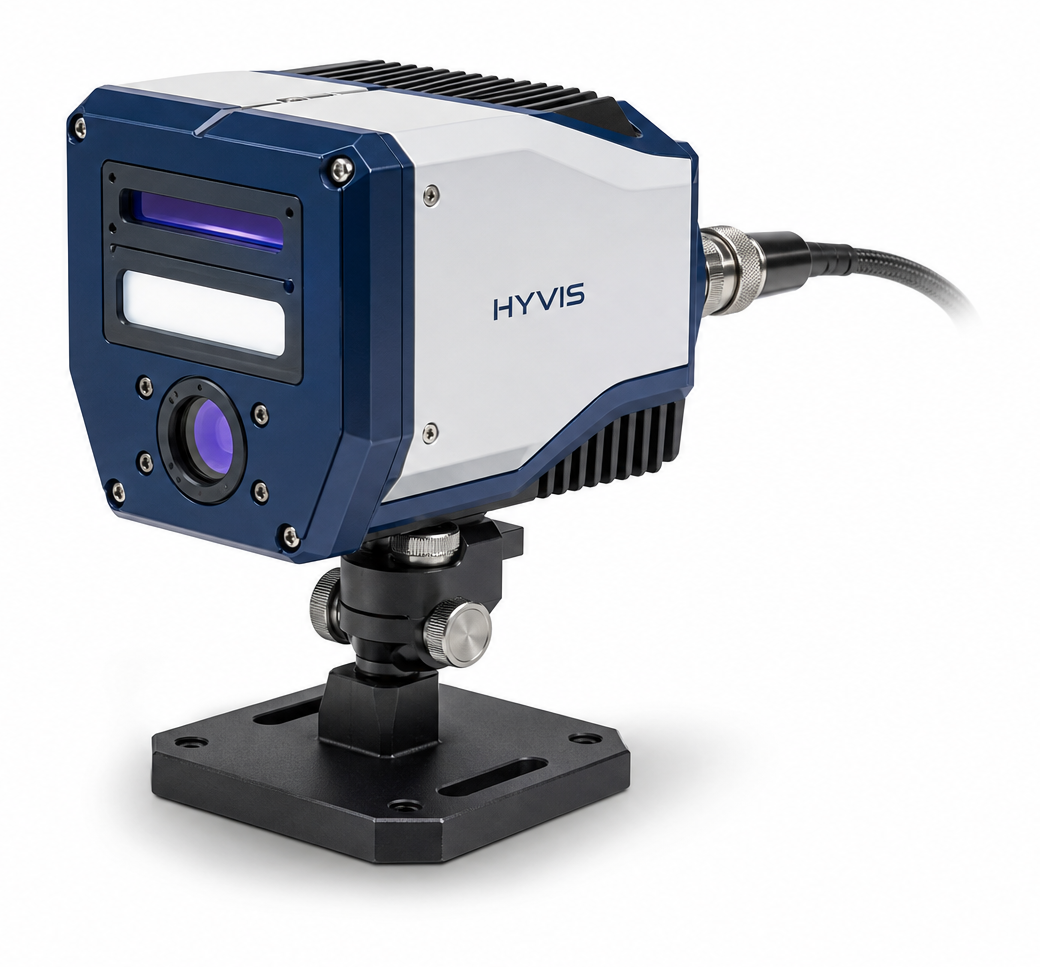
HYVIS spectral material-signature sensing module
Machine taste analogue · Material-signature analysis

Human Taste

Machine Material signature

Differentiate selected surface and material signatures.

Robots do not taste. For inspection, the closest useful analogy is a spectral or chemical measurement configured to distinguish selected material, coating or contamination signatures under controlled capture conditions.

Spectral signatureSurface comparisonChemical sensingControlled illumination

What it captures

A measured response tied to the sample area, illumination, distance and mission context.

Operational use

Support comparison against site-approved reference states rather than make an unsupported universal classification.

Technology layers

Four layers. One operating context.

Select a layer to see what it contributes, what information it receives and what it passes into the next stage of the workflow.

Swipe the layer card01 / 04

01 · Mobility layer

Put the inspection point within reach.

Configure movement around the route, access constraints and operating rules of the facility before selecting the sensing payload.

Autonomous navigation
Route planning
Obstacle avoidance
Automatic charging
Fleet coordination
Remote operator control

Receives

Site map, route rules and mission schedule

Produces

Robot position, route progress and operating status

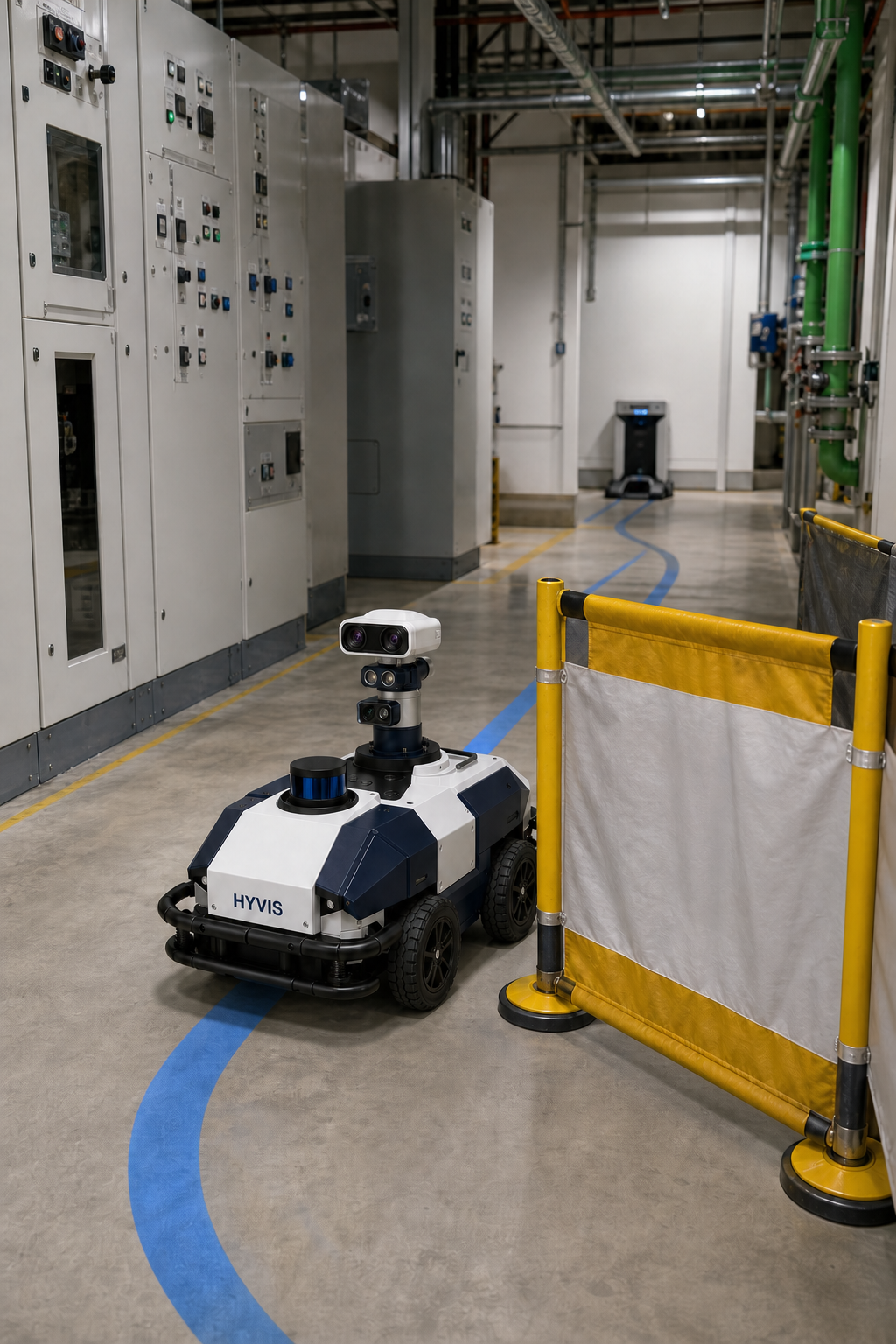
HYVIS inspection rover following a planned route around a maintenance barrier
Mobility layer · Route access and obstacle avoidance

02 · Perception layer

Capture the evidence the use case requires.

Combine selected imaging and sensing modalities around the asset, environment and inspection distance—not around a fixed sensor bundle.

RGB imaging
Thermal imaging
Hyperspectral sensing
Sound and gas sensing
Temperature and humidity
Dust, smoke and LiDAR

Receives

Defined viewpoints, asset targets and site conditions

Produces

Time-stamped visual, thermal and environmental evidence

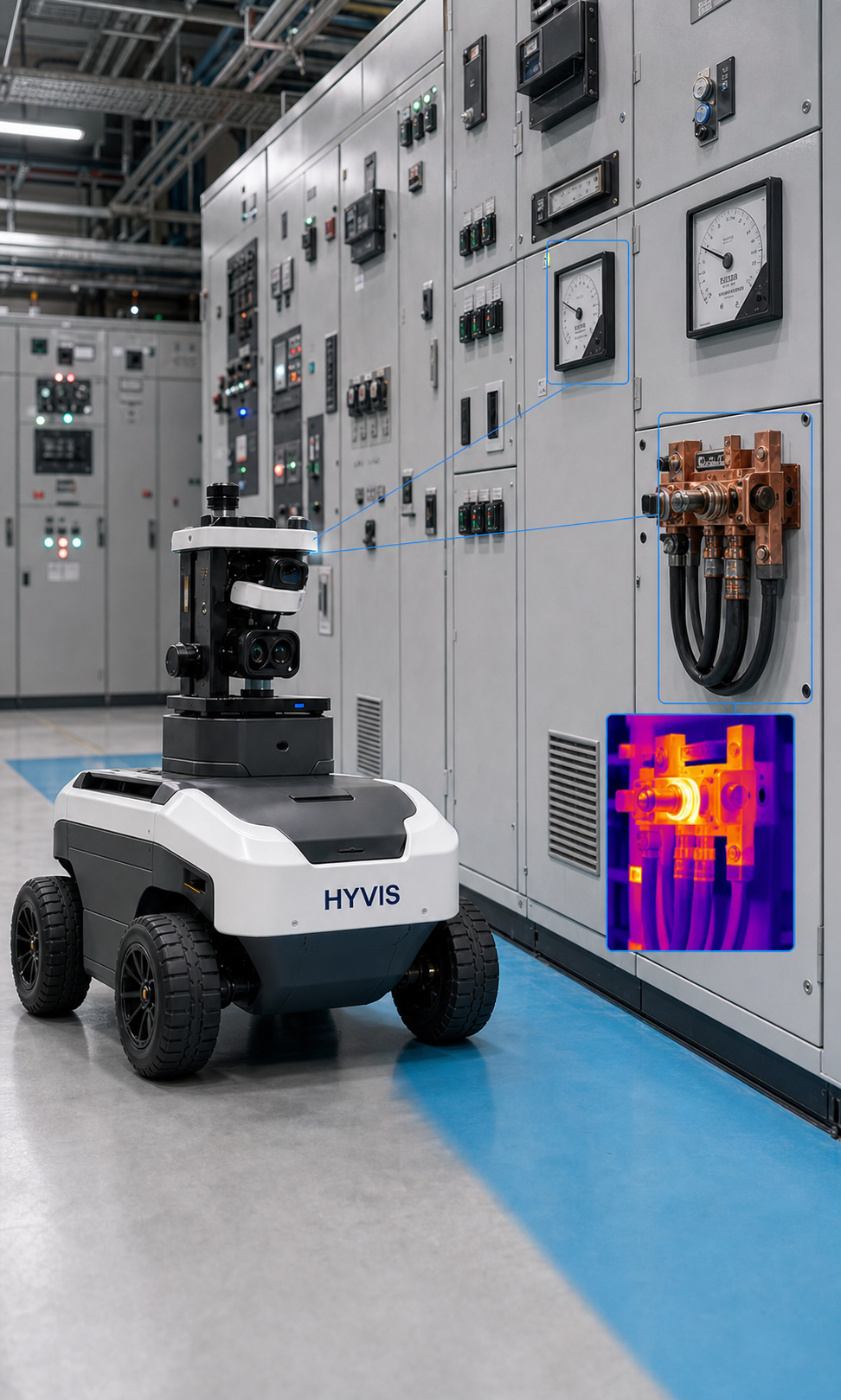
HYVIS inspection robot capturing meter and thermal evidence from switchgear
Perception layer · Targeted multi-modal evidence capture

03 · Intelligence layer

Turn captured evidence into configured findings.

Apply recognition, thresholds and trend logic to selected inspection targets. Results depend on real site imagery, sensor position and target variation.

OCR and meter recognition
Indicator recognition
Object detection
Thermal anomaly analysis
Environmental thresholds
Material and trend analysis

Receives

Site evidence and agreed review criteria

Produces

Recognition result, threshold event and source evidence

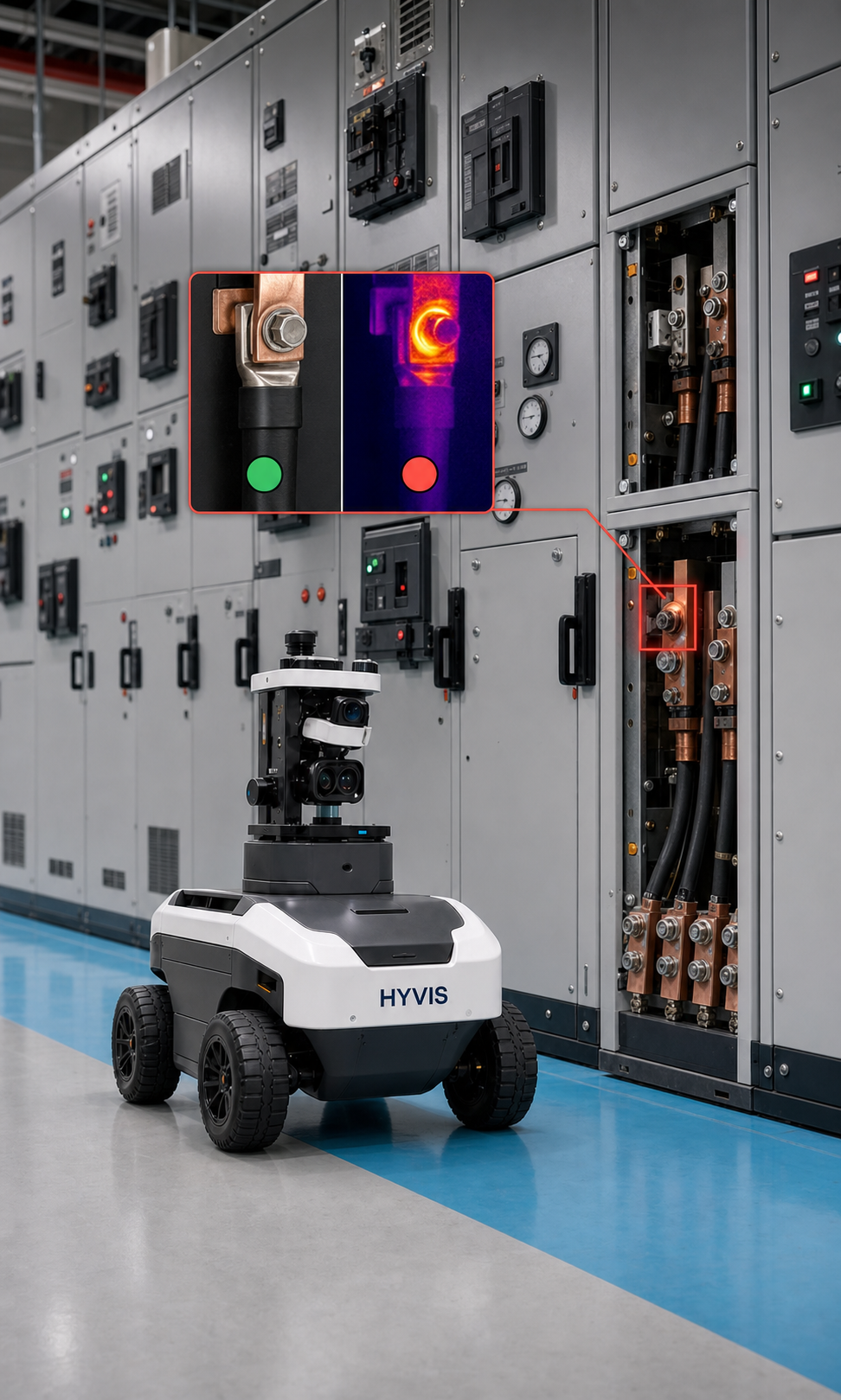
HYVIS inspection robot linking a visible cable-terminal fault to visual and thermal evidence
Intelligence layer · Finding linked to source evidence

04 · Operations layer

Move findings into the operating workflow.

Coordinate missions, review source evidence, manage alerts and connect approved outputs to the systems and teams that act on them.

Mission scheduling
Robot and mission status
Live inspection view
Alert centre
Historical trends
Reports, users and APIs

Receives

Mission records, findings and operating responsibilities

Produces

Reviewable alerts, reports, trends and integration events

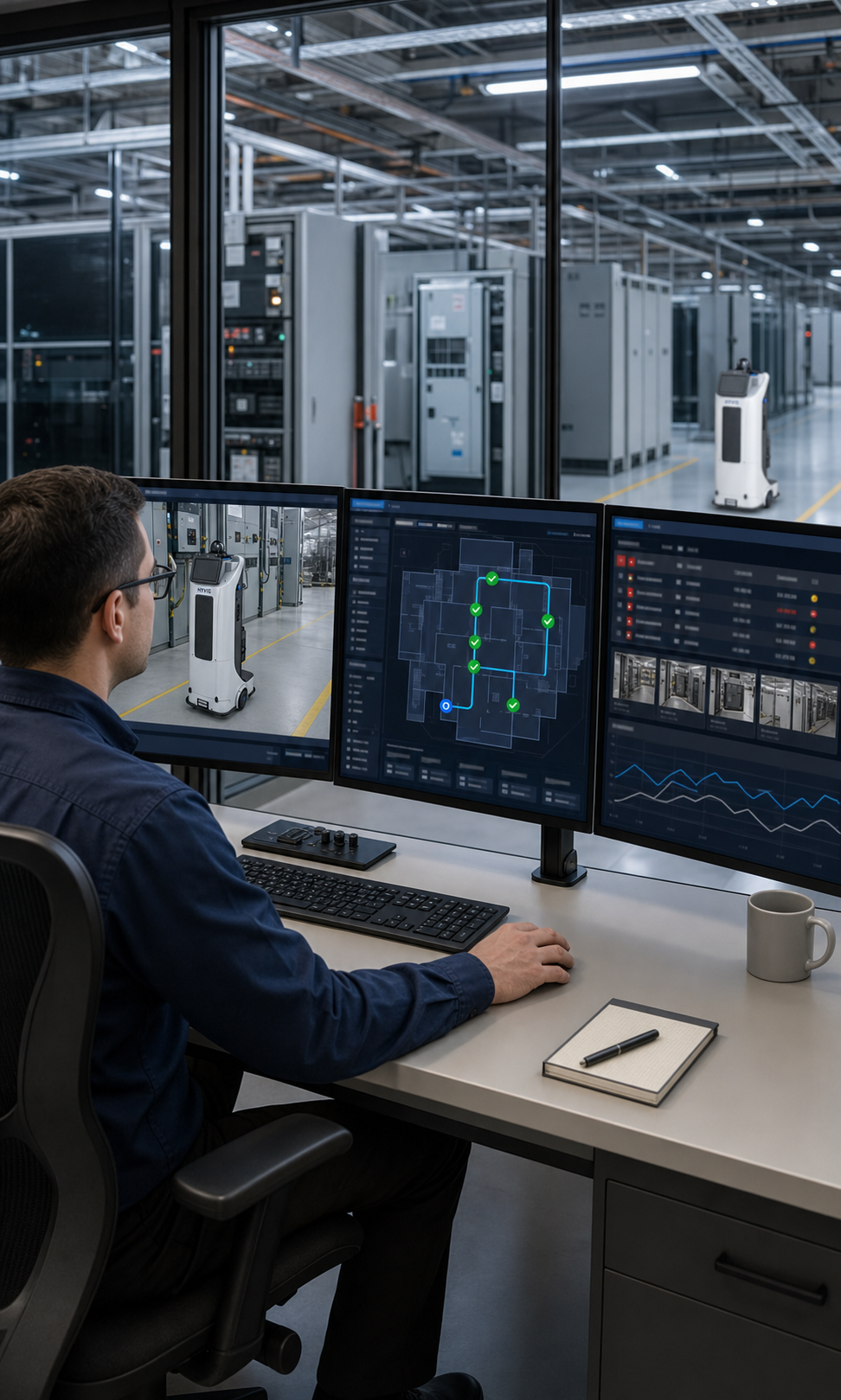
Industrial operator reviewing a HYVIS mission route, alerts and inspection evidence
Operations layer · Mission, alert and evidence review

From mission to action

Keep every finding connected to its evidence.

Technology becomes operational when the route, sensor evidence, analysis result and review action remain part of one traceable workflow.

01

Plan the mission

Define the route, inspection points, timing and operating constraints.

02

Capture evidence

Position the selected sensors and retain the source data for review.

03

Apply analysis

Run configured recognition, threshold or trend logic on selected targets.

04

Review the finding

Connect the result to its source image, reading, location and mission record.

05

Connect the action

Route approved alerts, reports or events into the customer workflow.

Integration principles

Configured as a system—not claimed as one black box.

HYVIS configures and integrates robotic, AI and sensing technologies into a unified customer workflow. Component selection and responsibility remain explicit.

Site configured

Architecture, sensors and operating rules are selected around the real route, target and environment.

Evidence connected

Recognition results and alerts stay linked to the source evidence and mission context that produced them.

Interface aware

Data exchange, user roles and downstream actions are agreed before production integration.

Pilot validated

Feasibility and performance are evaluated in the intended operating conditions before scale decisions.

Technology ecosystem

Use the right technology for the inspection problem.

HYVIS works across robotic mobility, machine perception, industrial sensing and operational software to shape one site-specific configuration. Partner identities and component choices remain project-dependent.

Robotic mobility

Ground, rail and specialized access configurations.

Vision and sensing

Selected visual, thermal, environmental and spectral modalities.

Machine intelligence

Configured recognition, thresholds and evidence review.

Industrial integration

Mission, alert, report and API workflows agreed with the site team.

Start with the workflow

Bring us the route, target and operating constraint.

HYVIS will shape the mobility, sensing, analysis and integration layers around what the site needs to validate.