
Repeatable viewpoint
Mission positions selected to keep the target and thermal region consistently visible.
Autonomous thermal inspection
Combine repeatable robotic viewpoints with configured thermal capture so apparent temperature patterns, source imagery and asset context remain connected for review.
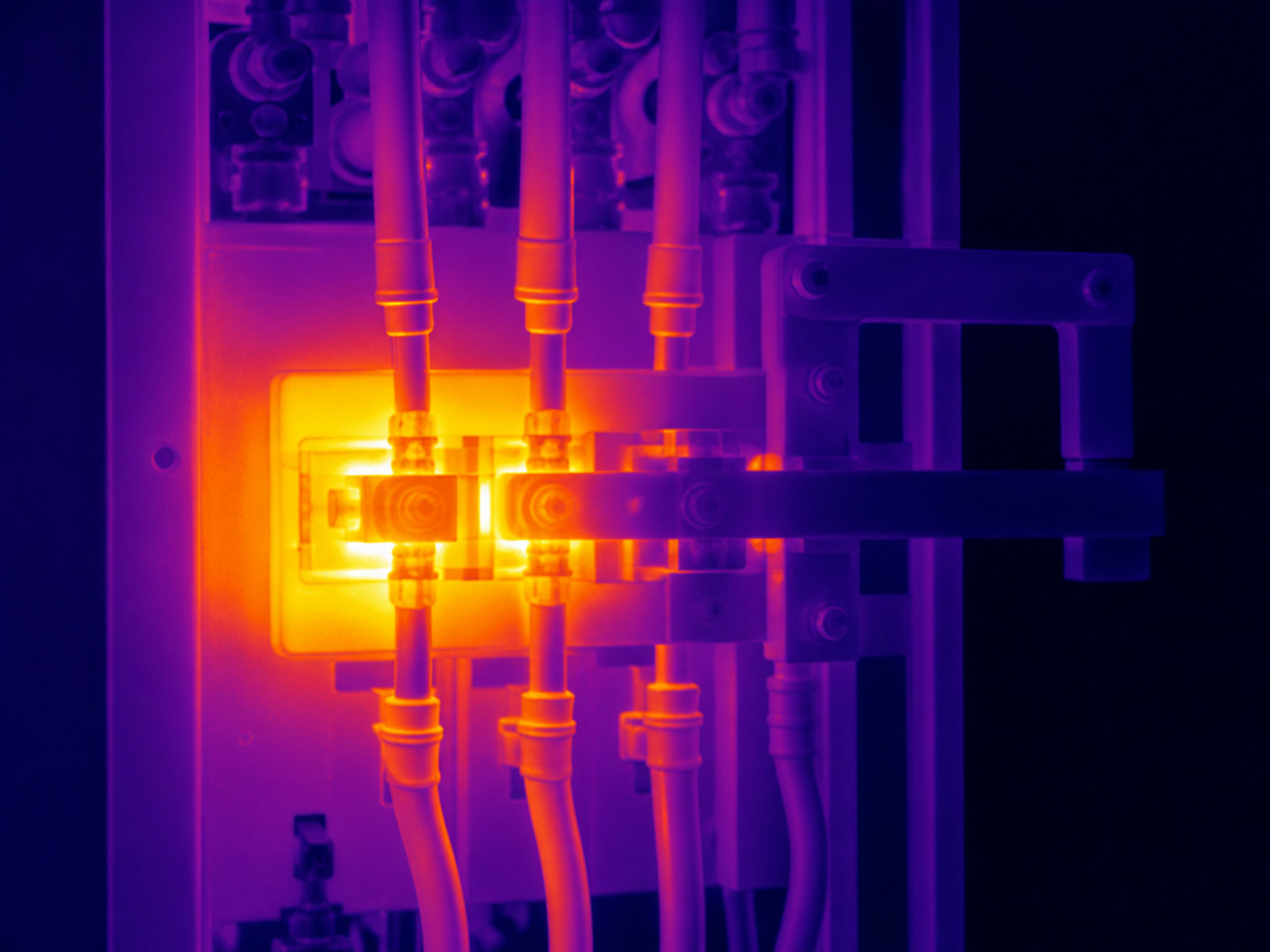
Representative application environment
Final platform, route and sensing configuration are site validated.
The inspection challenge
A thermal image is useful only when the target, viewpoint, operating context and review responsibility are clear. Emissivity, reflections, distance and loading conditions can influence apparent surface temperature.
Mission positions selected to keep the target and thermal region consistently visible.
Thermal evidence paired with visible imagery and the registered asset.
Site-selected thresholds and comparison rules used to prioritise human assessment.
Application workflow
The technology is selected after the inspection target and operating process are understood. Each stage creates an input for the next decision.
Define the equipment, thermal region, expected operating context and viewing constraints.
Confirm that distance, angle, reflections and obstructions support usable evidence.
Record thermal and visible evidence with the asset, route and timestamp.
Compare configured observations and direct exceptions to authorised personnel.
Validation note
Thermal performance depends on the camera, target surface, angle, distance and operating condition. The pilot defines what constitutes usable evidence and when human follow-up is required.
Application questions
No. It provides structured thermal evidence for review and may help prioritise follow-up under the site's maintenance procedure.
Configured inspection points can create a historical record when viewpoints and operating context remain suitable for comparison.
Surface emissivity, reflections, target size, distance, angle, obstructions and equipment loading can all affect interpretation.
Site-specific assessment