
Access
Ground, slim-aisle, rugged or overhead routes selected around the workplace.
Industrial inspection robotics
HYVIS Intelligent combines robotic access, AI vision, thermal imaging and industrial sensing to build repeatable inspection workflows for critical facilities in Malaysia and Southeast Asia.
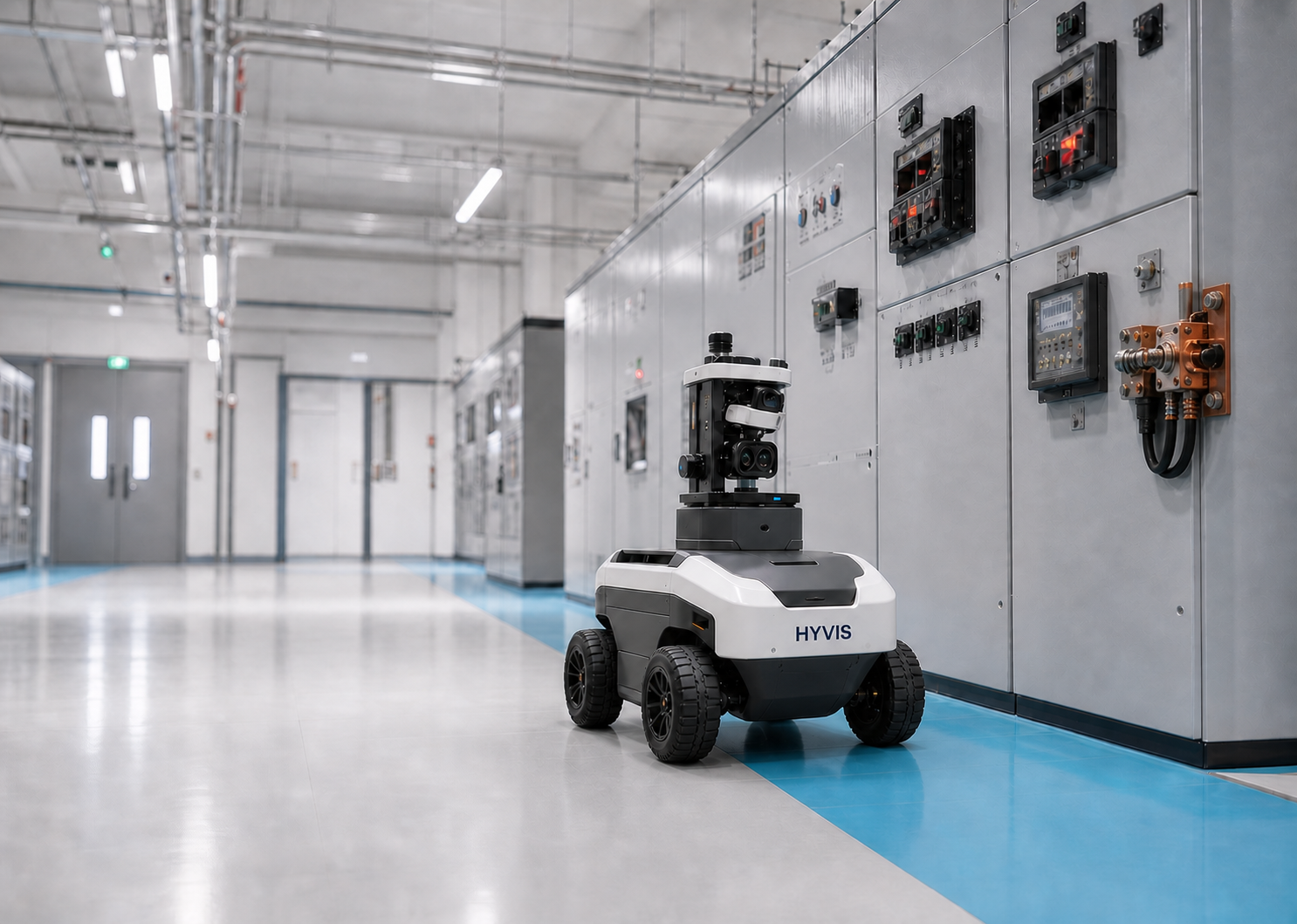
Representative application environment
Final platform, route and sensing configuration are site validated.
The inspection challenge
Industrial sites rarely need mobility alone. The route, target, sensor position, evidence format and responsible reviewer must work together. HYVIS starts with those operating conditions before selecting a robotic platform or analysis method.
Ground, slim-aisle, rugged or overhead routes selected around the workplace.
RGB, thermal, acoustic, gas and selected field sensing configured for the target.
Mission records, source evidence, alerts and reports connected to responsible teams.
Application workflow
The technology is selected after the inspection target and operating process are understood. Each stage creates an input for the next decision.
Identify safe travel paths, inspection points, operating windows and access restrictions.
Agree what must be visible or measured at each target and how it will be reviewed.
Combine a suitable platform, sensors, capture positions and site-specific rules.
Validate feasibility and evidence quality under real conditions before wider deployment.
Validation note
Autonomy, sensing and analysis performance depend on route geometry, lighting, distance, environmental conditions and target variation. Final acceptance criteria are agreed and tested during the pilot.
Application questions
It is a mobile or rail-based robotic system configured to reach selected assets, capture inspection evidence and return that evidence to an operational review workflow.
No. Floor conditions, aisle width, gradients, outdoor exposure, overhead access and sensor height can require different platform forms.
Selected reports, alerts and mission events can be integrated after the required interfaces, ownership and cybersecurity constraints are reviewed.
Site-specific assessment