
Slim access
A compact platform selected for aisle width, turning space and floor constraints.
Data-centre inspection robots
Configure a slim HYVIS inspection robot to capture thermal, visual and environmental evidence around racks, power equipment and cooling infrastructure without presenting the robot as a replacement for site operators.
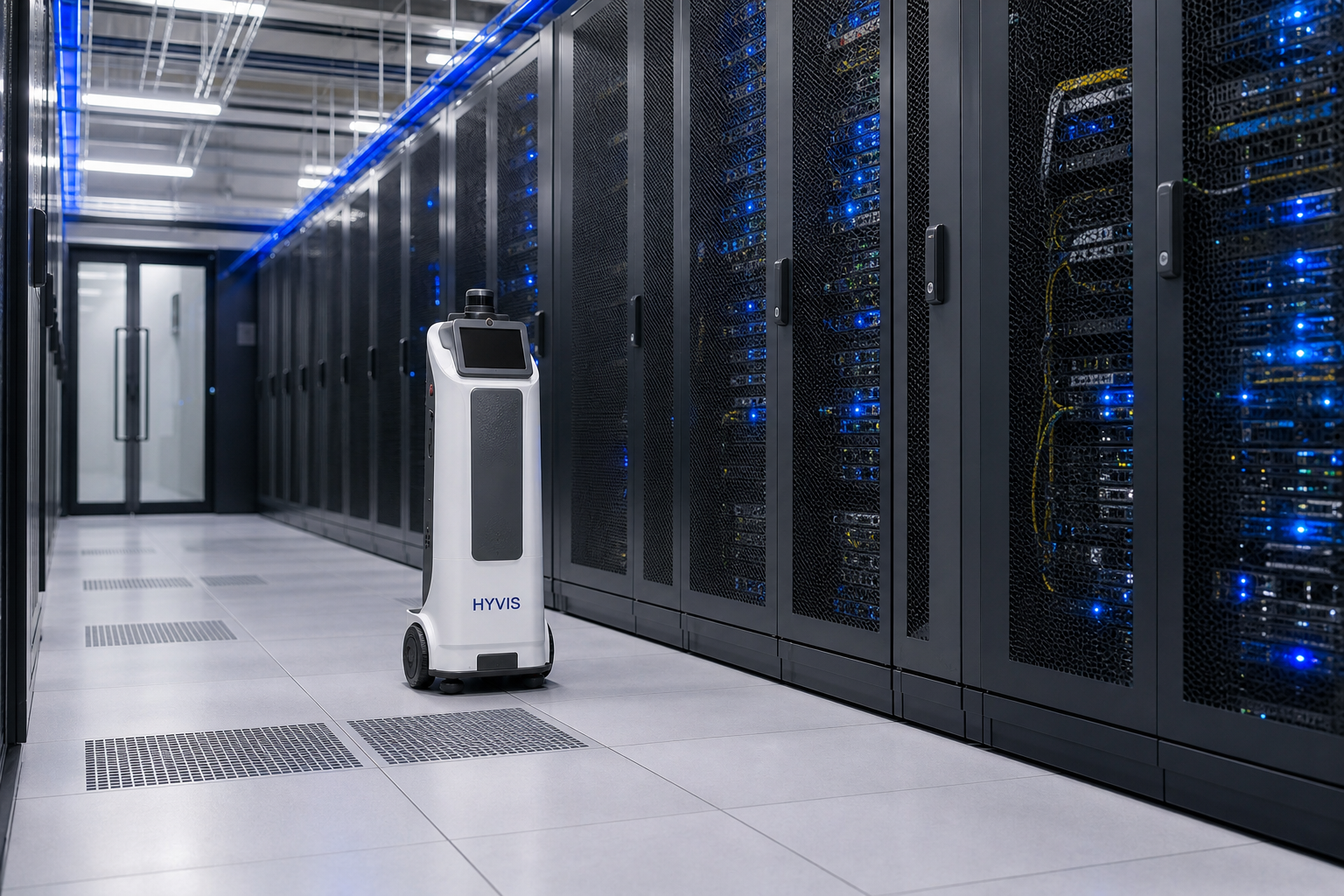
Representative application environment
Final platform, route and sensing configuration are site validated.
The inspection challenge
Data-centre inspections can span rack rows, UPS rooms, electrical panels and cooling equipment. Manual rounds may vary by route, viewing angle and record format, making comparison over time more difficult.
A compact platform selected for aisle width, turning space and floor constraints.
Configured views of selected rack, cooling and electrical targets.
Selected temperature, humidity, particulate or acoustic readings tied to the mission.
Application workflow
The technology is selected after the inspection target and operating process are understood. Each stage creates an input for the next decision.
Confirm clearances, traffic rules, reflective surfaces and suitable stopping positions.
Define the racks, indicators, panels and environmental zones that require evidence.
Capture comparable observations at configured positions and operating windows.
Connect findings to source evidence so authorised teams can assess the condition.
Validation note
A pilot should confirm aisle access, image quality, thermal viewing angles, wireless coverage and the site procedure for reviewing findings before production use.
Application questions
Coverage depends on the registered targets, visibility, aisle access and the sensor position proven during the site pilot.
Route rules, stopping positions and operating windows are designed with the site team to minimise operational interference.
Typical configurations combine visual images, apparent thermal patterns, selected indicators and environmental readings.
Site-specific assessment