
Challenge
Limited inspection frequency
Manual rounds compete with higher-value maintenance and engineering work.
HYVIS Inspect
HYVIS combines validated routes, robotic mobility, sensing, configured analysis and digital reporting to support repetitive inspection workflows.
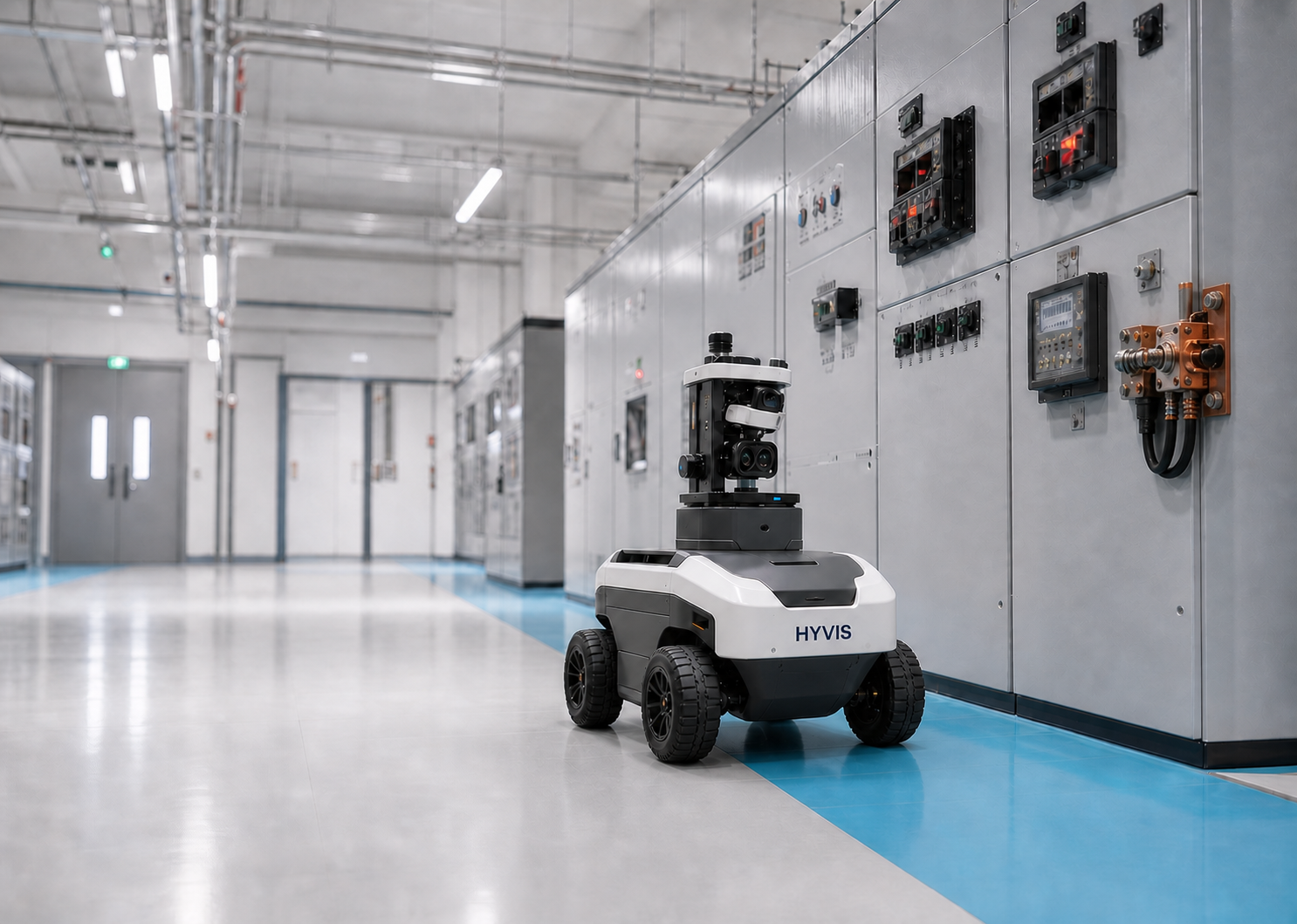
Operational challenge
Autonomous inspection adds repeatable coverage and structured evidence without removing the need for engineering review and site-specific operating controls.
Manual rounds compete with higher-value maintenance and engineering work.
Routine coverage becomes harder to sustain across shifts and large facilities.
Exposure, access controls and operating conditions limit consistent observation.
Photos, notes and readings vary by operator and documentation practice.
Important thermal, visual or environmental changes may be escalated too late.
Teams spend time consolidating evidence instead of acting on inspection findings.
Typical workflow
Each mission links route execution, sensor capture, analysis and operational evidence into one traceable record.
Stage 01
Run a defined route by calendar, shift, event or operator request.
Evidence captured
Mission ID, route, start time and assigned inspection points
Key capabilities
The value comes from coordinating mobility, perception and operational outputs around the customer’s inspection process.
Mission autonomy
Inspection intelligence
Operational outputs
Mission evidence
Point E-12 · Switchgear panel
What one mission delivers
Each inspection point can combine visible imagery, thermal context, sensor readings and status analysis in one reviewable record.
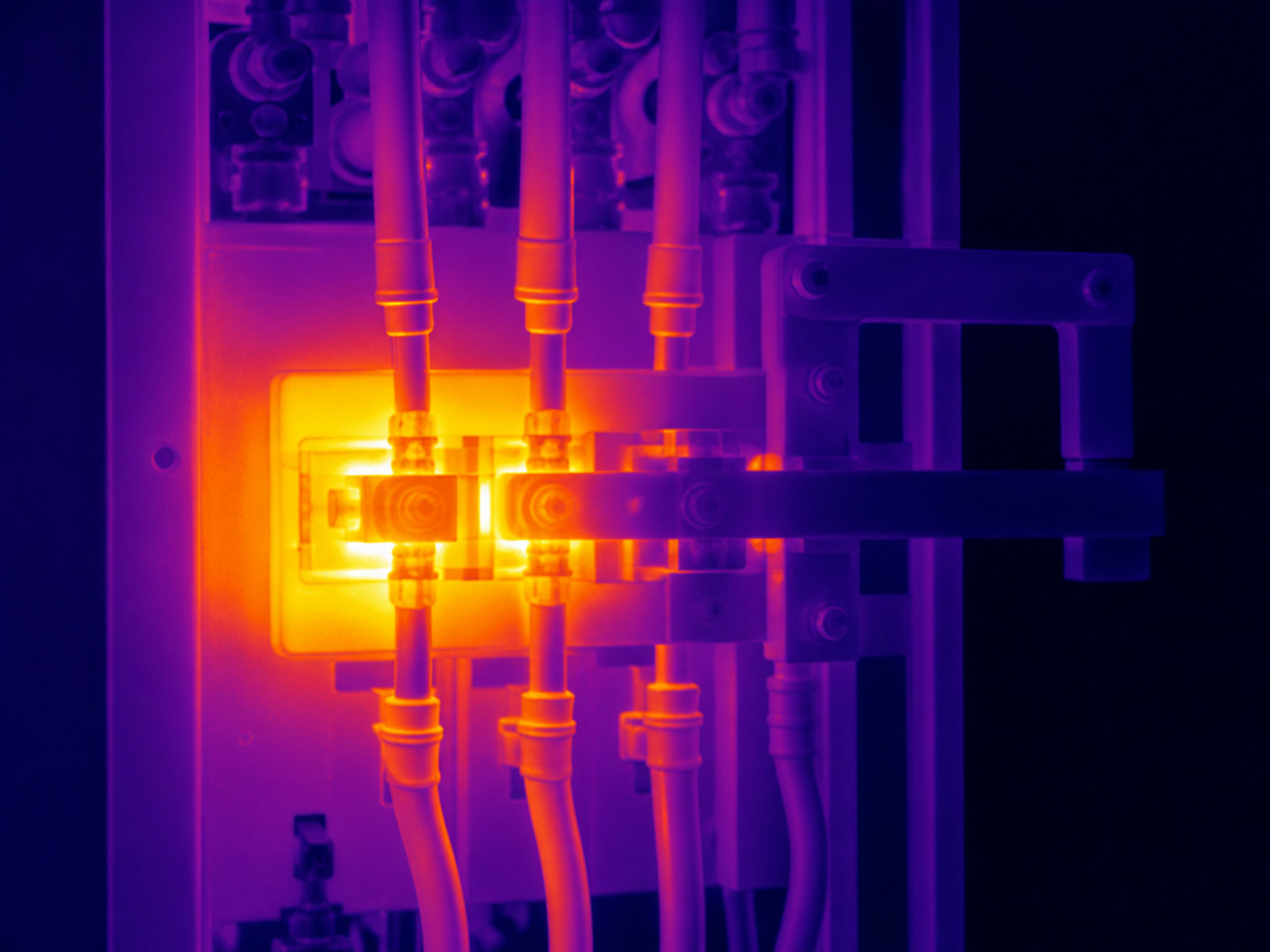
Thermal evidence
78.6°C
Recorded with inspection point, threshold status and visible reference.
Best-fit environments
Platform type, sensors and autonomy functions are selected according to the facility layout, operating conditions and inspection target.
Production and utility patrols
Switchgear and meter inspection
Equipment and cooling visibility
Long-route restricted access
Scheduled facility rounds
Configured terrain coverage
Validate on site
Use the Pilot Program to test route access, repeatable viewpoints, charging or service points, and mission handoffs in the intended facility.